+1 212 555 0123. A country code and ten digits, they say less than you might think. Not even if it's a mobile. Not even, for certain, which country it belongs to.
What each part means
All US numbers have the same basic format. After the +1 country code, there is a three digit area code, followed by three digits for the exchange, followed by the four digit line number. The only restriction for the codes is that the initial digit of an area code or exchange cannot be 0 or 1 and that's why you never encounter a valid number that begins +1 055.
| Where you are writing it | Format |
|---|---|
| International | +1 212 555 0123 |
| Inside the US | (212) 555-0123 |
| Online forms and apps | +12125550123 |
| Dialling from most of Europe | 00 1 212 555 0123 |
The shortened form in row 3 is the one you want online forms to accept. If it errors out on your number, removing any spaces, brackets, or dashes should be the first thing you do.
+1 is not only the United States
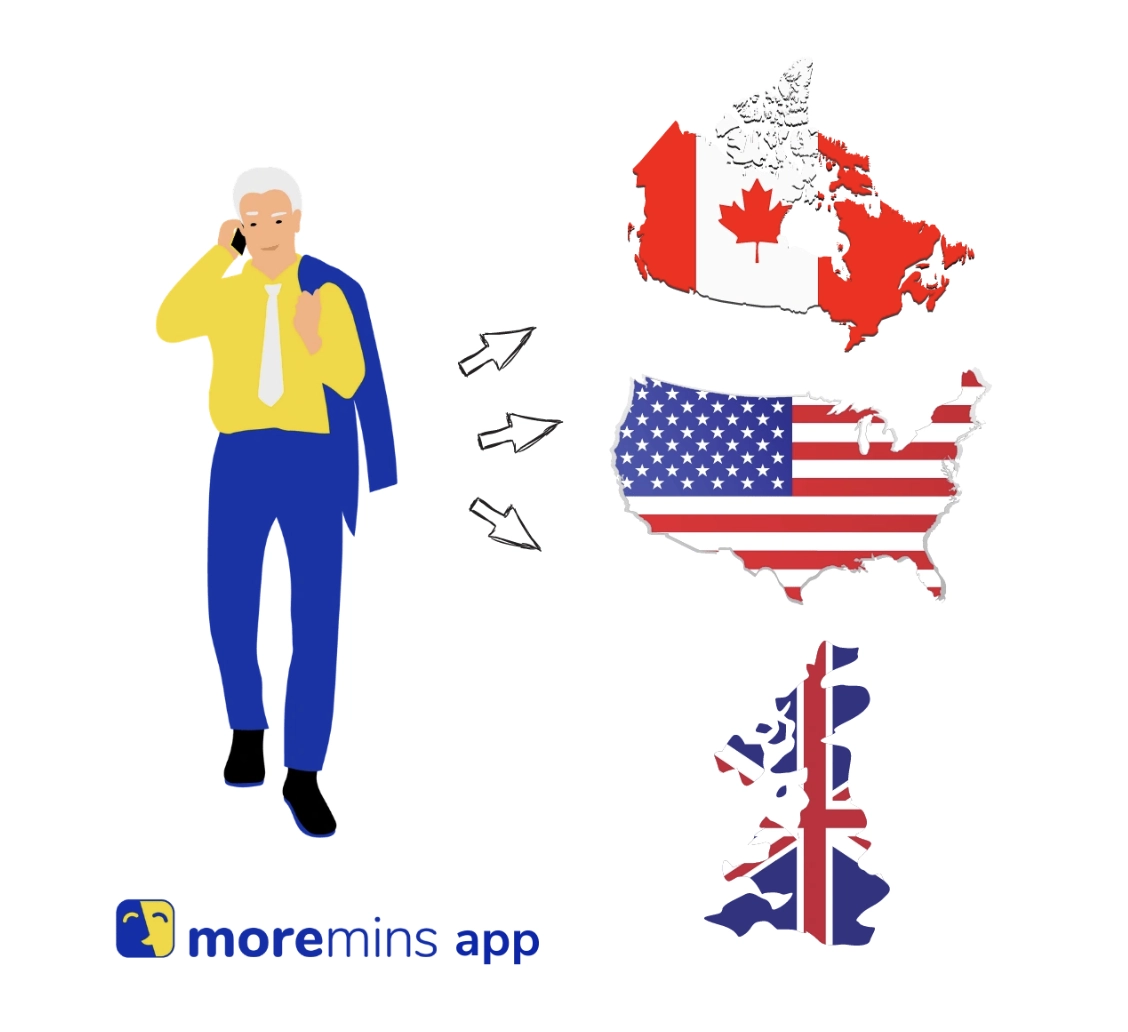
The +1 code is part of the North American Numbering Plan. It was published by AT&T in 1947. Currently twenty countries use this ten digit system including the US, Canada and the Caribbean countries of the Bahamas, Dominica and the Dominican Republic.
So what does +1 mean before the number? A "+1" is not American by default, the area code determines, and you are making an international phone call to some +1 numbers.
You cannot spot a mobile by looking
In the UK, you know it's a mobile if it starts with 07. Some other European countries also have their own prefix for mobiles. Not so in the US. Both landlines and mobiles share the same area codes, so you can't tell just from the number.
That is more important than it looks. An app doesn't know your number type and therefore can't know if the text will go through. It queries a database of carriers to see what type of number it is, and whether it's a landline, mobile, toll free or VoIP number - that's what determines if you get the code.
The numbers that only exist on screen
Ever seen those American movies where the number starts with 555? It is a fictional number: the range 555-0100 to 555-0199 is also only for use in films and TV, to stop viewers calling real Americans. This example at the top of this blog does it too.
Toll-free numbers
Numbers starting 800, 888, 877, 866, 855, 844 or 833 are toll free: the company that owns the number pays for the call, not the caller. The FCC notes: these toll free area codes are not interchangeable. For example, a toll free number beginning with 1-800 does not receive calls that begin with 1-888. Toll free numbers are specifically designed for incoming calls and they're generally refused on sign-up forms.
Getting a US number when you are not in the US
A US number is useful for more than just the US: for American clients, for services that are programmed for a +1 number, for family who might prefer local calls. Abroad, the simplest way to get one is a temp number that lives in an app and works on the web, so it does not matter where you are. MoreMins's US virtual phone number starts at $0.99/month, and with its buy one get one offer you get a free US number for a month.
Calls and texts are free incoming.
A US temp phone number offers a number, not an address, a home address or otherwise, so look out for services that check an ID as well.
Quick answers
How many digits is a US phone number?
Ten, not counting the country code: a three-digit area code, a three-digit exchange and a four-digit line number. With the country code it is written +1 212 555 0123.
What is the country code for the US?
The US is +1, which it shares with many other countries. The area code (the first three digits) tells you roughly where a phone number is from.
Can you tell if a US number is a mobile?
Not from the digits. You can't tell what kind of line it is from the area code, but apps can, with a carrier lookup.
The short version
The format is +1, area code, exchange, line number. They give some indication of where a number was assigned and nothing about what type of line it is.