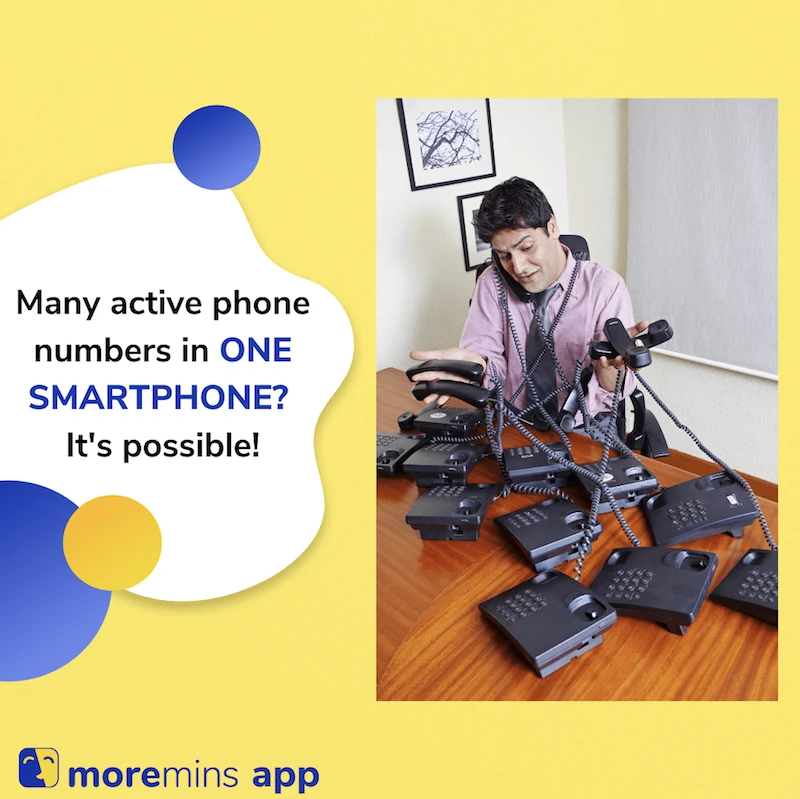
One journey overseas began with a six-minute conversation meant to arrange arrival details. Forty-two dollars vanished afterward without warning. Fees arrived separately, connection costs, minute-by-minute usage pricing, then an extra fee labelled "international zone," never discussed when opening the account. After that moment, each departure now includes a virtual phone number active during travel, with the home SIM kept in but switched out of roaming. Avoiding repeats became necessary.
What a virtual phone number can do for travelers
An application stores the telephone identifier remotely. Physical SIM cards become unnecessary under this setup. Communication travels via wireless internet or data networks instead of traditional circuit-switched pathways. Appearances shift geographically, ringing devices may seem tied to British locations even when users sit near Balinese shores. A message sent to someone in Toronto might carry a Lithuanian number label. Physical separation no longer creates barriers.
Most people who travel face one of two situations. Should your home number remain active during trips? That way, relatives, financial institutions, verification systems, or perhaps a dental office may reach you regardless of location. Alternatively, suppose a temporary local line becomes useful overseas. Drivers offering transport, lodging contacts, or dining venues might then contact you directly, avoiding cross-border fees on their end.
One option involves maintaining two connections at once. Take someone with relatives nearby yet professional ties in Britain, they might hold on to their local service while adding a second phone number from the UK alongside it. The same device receives calls from both lines. Operation continues uninterrupted, even when the primary SIM has roaming switched off.
Why your primary SIM is actually the problem
When traveling abroad, your home provider links to another country's network so your device keeps working. Because of this arrangement, fees tend to rise sharply. Each minute spent speaking on a call could cost between fifty cents and three dollars. Receiving voice calls might carry a fee too, an aspect often overlooked; access comes at a price even when silent. In certain locations, a single megabyte of mobile data has reached ten dollars in cost.
Free roaming options exist in various forms. While T-Mobile offers an international package spanning numerous nations, speeds tend to drop noticeably. People living in the European Union move across member states without charge, thanks to Roam Like At Home regulations. Once travel extends beyond those boundaries, unexpected charges may appear again.
Should a daily package run at ten dollars each day in two hundred nations, the total for fourteen days reaches one hundred forty dollars, just to maintain service on a device. A virtual phone number, by contrast, costs as little as $0.99 per month and keeps the same line running across every trip taken that year.
How travelers actually set this up
After several journeys, a majority begin adopting an arrangement similar to what follows:
- With the home SIM still inside, disable cellular roaming through the device menu. Roaming data must also be switched off within settings. This configuration remains active while the primary card stays inserted.
- Set up MoreMins to get a virtual number tied to your native country. From there, receiving calls or messages on that line brings no cost, regardless of location. The service operates without extra charges for inbound communication.
- Upon reaching your destination, connect through hotel internet access. Otherwise, a nearby coffee shop may offer network availability. Failing that, consider acquiring a regional eSIM. This option typically costs between ten and twenty dollars and often lasts one full week, sometimes extending into a second.
- Using the app requires an active internet link. Communication functions operate via this channel. Messages travel across it, just like voice conversations. Bank confirmation digits follow when redirected to the virtual line.
This small point carries greater weight than most expect. Should your bank dispatch a single-use code via text to your local number without roaming enabled, the delivery will probably fail. A virtual phone number, matching your primary line or preassigned for confirmations, handles the gap without notice.

The trick of having a local number in your destination country
A minor detail, yet one with real effect, has proven useful more than once. Booking through a host platform often leads to outreach via the contact number provided. Should that be your main residential line without international roaming enabled, the incoming call may go unanswered. This absence can unsettle the host, shaping an uneasy start before arrival.
Ahead of travel, secure a virtual phone number assigned to your destination nation. Following arrival, access incoming calls through wireless internet once touchdown occurs. Rather than using personal contact details, supply this temporary identifier during reservation steps. Available options span across fifty jurisdictions, including UK virtual numbers and US virtual numbers. Upon activation, communication functions without reliance on traditional cellular networks.
This approach works similarly for job interviews held outside one's country, package drop-offs at short-term locations, or eateries verifying meeting times. Often, residents anticipate numbers that match their national format. Any international prefix may trigger suspicion instead.
MoreMins support explained
Get the application. It runs on iPhone and on Android, with the same features available on both.
Start with selecting a destination and a matching virtual phone number, followed by covering the recurring charge. Numbers tied to the United Kingdom or United States begin at 99 cents each month. A connection assigned to Lithuania comes in at $1.25 per cycle. Meanwhile, lines registered in the Netherlands or Ukraine require $2.49 every month. Reaching the upper range, Sweden and Hong Kong sit at $6.99 monthly. Reviewing the complete regional pricing list helps match the selection to travel needs.
Every incoming call, along with each received message, carries no cost regardless of location globally. Reaching numbers abroad follows pricing shaped by destination country, independent of your current physical position. Suppose you make an outbound connection from Japan to a fixed line in the United States, the expense remains near one or two cents per minute, matching standard US domestic rates. Using MoreMins, cheap international calls turn into common practice instead of rare occurrence.
Cancellation operates on a monthly basis. Should travel be postponed, the agreement concludes at month's end. Heading to Mexico soon? A short-term local number can activate for the visit. Once returning home, discontinue the service without delay.


Virtual number, eSIM or regular roaming - the differences
Though frequently mistaken for one another, these terms relate distinctly to using your phone overseas while serving separate purposes and matching varied users. Each addresses mobility across borders yet operates under unique principles meant for particular needs. While linked by context, their roles diverge clearly when examined closely through usage patterns. What seems interchangeable at first reveals functional distinctions upon closer inspection.
| Option | Best for | Cost |
|---|---|---|
| Carrier roaming | Short trips with a generous plan | $10/day or $0.50–3.00/min |
| Travel eSIM | Local data, browsing, maps, ride apps | $10–25 per 1–4 weeks |
| Virtual phone number | Calls and SMS on a stable number | From $0.99/month |
| WhatsApp / Viber | Talking only to other app users | Free, app to app |
An eSIM serves well for regional internet access, whereas a virtual phone number provides actual call functionality using online networks. These tools work together more than they oppose one another, given that someone on the move typically uses a web-linked number for conversations along with a built-in SIM for connectivity. Despite different roles, both meet distinct communication needs during travel.
Things to remember before your first journey
Before getting on board, disable carrier data roaming. Access settings, go to mobile, find data roaming there. This single step prevents those tales where arrival home means facing a $400 charge, something nearly every traveller knows through word of mouth.
Wi-Fi calling abroad could be available via your provider; however, remember this differs from routing calls through an application. Some providers include it at no extra cost, whereas others embed fees quietly within terms. With a virtual number, uncertainty fades, calls travel via the app and appear on its billing structure.
It should be noted, Wi-Fi calling often uses extra battery power, especially when connected to weak signals. Should your day involve long stretches without access to electricity, bringing a mobile power unit makes sense. While this behaviour ties to network-based calls, not virtual numbers, awareness remains useful.
Whichever digit string handles confirmations for digital finance, payroll systems and workplace software deserves careful thought. Should the residence line take that role, lack of international data coverage might block entry when timing matters most. Routing alerts through an internet-based alternative ensures continuity, provided access remains consistent across locations. Another path involves shifting validation duties entirely to a time-based token generator on a personal device.
When receiving SMS verifications often, confirm your selected virtual number option allows message reception. Although many MoreMins packages cover inbound texts, certain services block messages to virtual lines. Try the function indoors prior to departure.
Yearly cost of this setup
A modest total when considering three or four journeys annually, lasting around two weeks apiece:
- Each trip costs one hundred forty dollars when using carrier roaming day passes. Four journeys add up to five hundred sixty annually.
- A yearly cost emerges when considering twelve monthly charges at ninety-nine cents each, this amounts to eleven dollars and eighty-eight cents for a virtual phone number in the United States via MoreMins. Additional expenses appear with every outbound connection, measured in fractions of a dollar.
- Travel eSIM data layered on top runs typically between sixty and eighty dollars yearly, assuming consistent provider usage across trips.
Numbers show a clear difference. Even after combining the virtual phone number with a travel eSIM and a few cents of outbound calls, the yearly total stays below $100; carrier roaming day passes total five or six times higher instead. Staying reachable drives most decisions to change, yet lower cost still plays a meaningful role too.
Quick FAQ
Does the service work while airborne? Functionality depends on Wi-Fi access. The app relies entirely on internet service. Messages wait silently, resuming delivery once signal returns.
Will two-factor authentication codes reach my MoreMins number? Most platforms support delivery without issue. A few exceptions exist, mainly some financial institutions restrict virtual-number access. Banking apps often present the strongest resistance. Other services usually accept such numbers readily. Verification works best when tried ahead of travel dates.
Must one maintain their domestic SIM inside the device? Functionality of the virtual line does not depend on it. Access to online connectivity is the sole requirement. Hotel internet networks work just as well. An international eSIM serves equally. So might a physically inserted regional card. Even shared connection from another person suffices.
Should the internet disconnect during a call, what happens? Audio stops immediately. Once online again, the system resumes automatically. Active conversations cannot continue after such an interruption, similar to standard internet calling platforms. Locations like major airports and large hotels generally offer sufficient bandwidth for understandable speech.
Is it possible to trial the service at no cost? A few nations offer temporary access through a free virtual phone number option. Testing the system without financial obligation becomes possible through these regions. Experience comes prior to purchase within selected territories.
Is it possible to only get text messages here? Indeed. You can receive SMS online without needing any outgoing communication at all.
Surprisingly simple choices shape travel routines differently. The total on your next phone invoice need not rise when trips end. Instead of paying extra, consider a virtual phone number, its price often smaller than a drink bought weekly. Usually, fees vanish if data roaming gets disabled ahead of departure. Unexpected savings start long before boarding begins.